
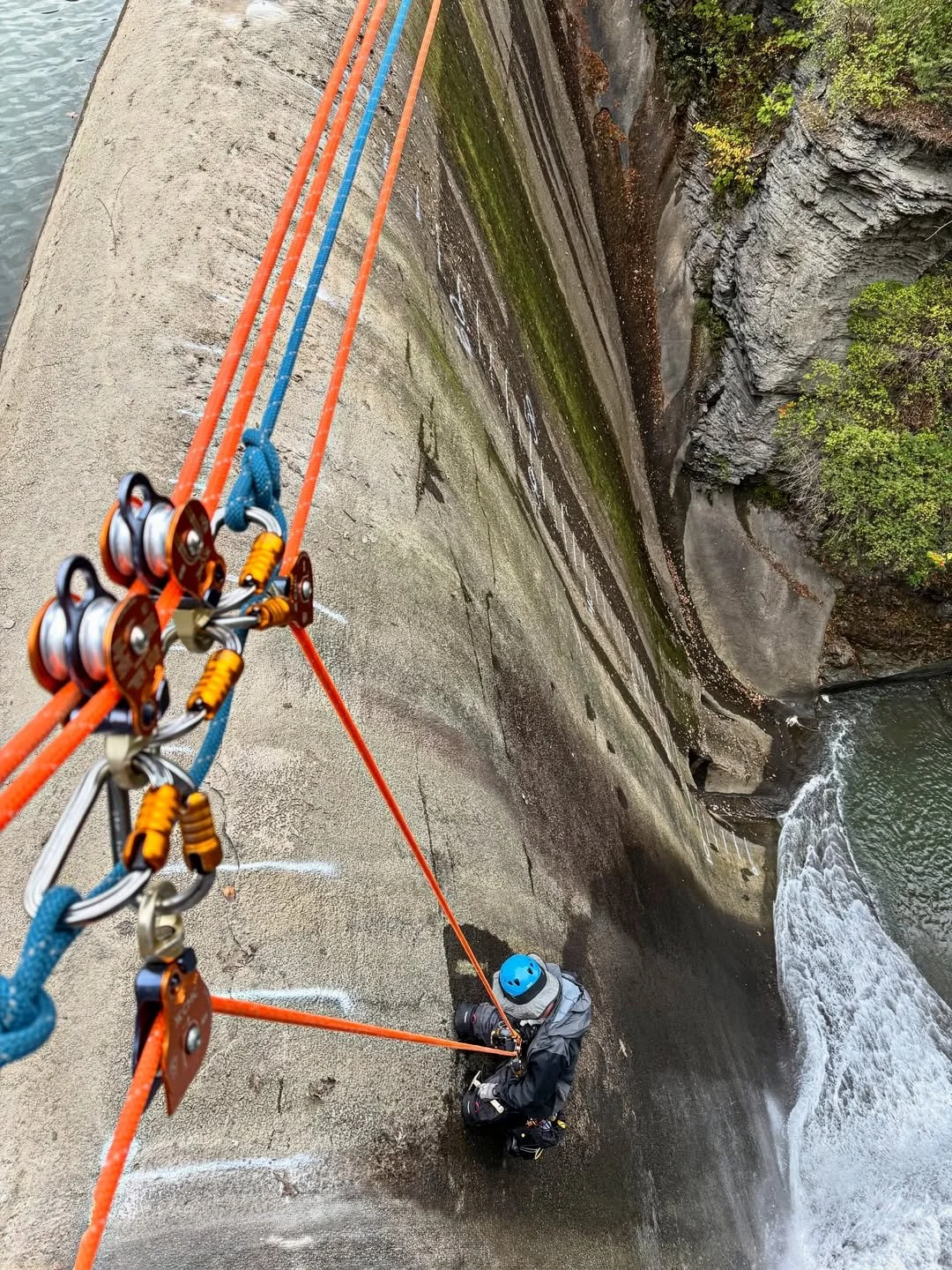
 Image 1 of 1
Personal Mobility for the Rescuer
A Foundational Skill Set for Fire Departments & Front-Country Rope Rescue Operations
Fire departments and front-country rescue teams operate in complex vertical environments—bridges, cliffs, quarries, embankments, industrial edges, and confined access points. NFPA standards rightly emphasize responder safety, system redundancy, and team-based operations in these environments.
Personal Mobility for the Rescuer is a foundational course designed to support and strengthen those objectives by developing the individual rope movement skills that underpin safe and effective rope rescue operations.
Rather than replacing NFPA-based training, this course prepares rescuers to better succeed within it.
Why Personal Mobility Matters Under NFPA Operations
NFPA 1006 and 2500 outline what rescuers must be able to do—but they are intentionally broad in how those capabilities are developed. In practice, many responders are asked to operate edge systems, manage litters, or access patients in suspension before they are personally comfortable moving on rope themselves.
This gap often shows up as:
Inefficiency at the edge
Overbuilt or overly complex systems
Hesitation or fatigue in suspension
Increased reliance on others for basic movement
Personal mobility skills address this gap directly. When rescuers are confident moving on rope, they:
Better understand rope behavior, friction, and load paths
Operate more effectively as edge attendants and litter attendants
Access and package patients more safely and efficiently
Reduce overall system stress and operational risk
In short, strong personal mobility enhances compliance, safety, and performance within NFPA-aligned rope rescue operations.
What This Course Covers
This is a hands-on, movement-focused course emphasizing individual capability in vertical environments, including:
Knots and personal gear handling
Rope behavior, friction management, and system awareness
Basic fall protection concepts relevant to fire and rescue operations
Ascending and descending techniques
Changeovers
Edge transitions and obstacle negotiation
Rope-to-rope transfers
Supplementary mobility techniques
These skills are then applied within rope rescue systems, specifically from common operational roles recognized in fire and front-country rescue environments:
Edge attendant
Litter attendant
Patient access and contact
The emphasis is on helping responders better understand how their movement interfaces with the system, not just how to operate the system itself.
Who This Course Is For
Fire departments with rope rescue responsibilities
Front-country SAR, park service, and municipal rescue teams
Personnel operating at the Awareness, Operations, or Technician level
Departments looking to strengthen foundational skills prior to advanced rescue training
This course integrates cleanly into existing training programs and supports NFPA-aligned objectives without requiring a rope access background.
The Takeaway
NFPA standards define what safe rope rescue looks like.
Personal mobility develops the individual capability required to achieve it.
By investing in the rescuer first, departments build teams that are more confident at the edge, more capable in suspension, and more effective during real-world operations.
Build the rescuer.
Support the system.
Improve the outcome.